 | en - es - fr January 2021    |
|
|
| ||||
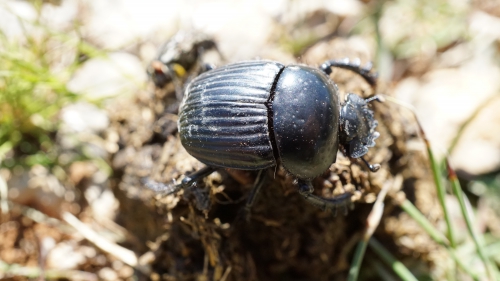
The first IUCN Red List assessment of Mediterranean dung beetles, released today, compiles the results from an assessment of 634 dung beetle taxa, of which 150 are endemic. This publication states that almost 20% of the species assessed may be threatened with extinction, including 25% of the endemic species. The new IUCN publication ‘The Conservation Status and Distribution of Mediterranean Dung Beetles’ also shows insufficient data to assess the risk of extinction of 37% of the species, which are classified as Data Deficient. “Recent findings showing the relationship between dung beetle diversity and human-induced changes confirm why this charismatic and very visible group of species was one of the indicator groups that was missing. Adding another invertebrate group also helps make the Mediterranean Red List more representative of the region’s overall biodiversity” commented Ana Nieto, Head of Species Conservation Action, IUCN Global Species Programme. According to the report, Mediterranean natural and agricultural habitats are facing major losses of dung beetles mainly because of human modification of natural ecosystems, as well as pollution, urban development and unsustainable farm management. Both overgrazing, which compacts the soil and changes vegetation structure, and livestock abandonment – which reduces the quantity of trophic resources - are considered some of the biggest threats for Mediterranean dung beetles. Indeed, the decline of cultural practices such as transhumance throughout Europe is likely to increase the pressure on dung beetles. Moreover, the comprehensive use of veterinary medical products leads to contamination of livestock faeces. The majority of these substances are poorly metabolised by livestock and are voided unaltered in their faeces, causing a great impact on non-target fauna such as dung beetles. “This Red List proves the need to boost efforts for halting biodiversity loss in the region and safeguarding our natural capital for future generations. The drivers for these declines are still in place. The conversion of grasslands into agricultural land for arable farming or forestry, unsustainable levels of intensive grazing, the indiscriminate use of veterinary medical products and the abandonment of livestock farming are important threats to these species. New innovative actions are needed towards more sustainable farming in the region” said Antonio Troya, Director of IUCN Centre for Mediterranean Cooperation. A highly vulnerable legal status The IUCN report claims the complete lack of legal protection for this group of species, which is excluded from key instruments and frameworks, such as the EU Habitats Directive, the Bern Convention on the Conservation of European Wildlife and Natural Habitats, CITES and other EU regulations on the use of antiparasitic drugs. The fact that many dung beetles are associated with natural open habitats and traditional agricultural landscapes with a moderate stocking density means that there are many areas where a rich diversity of dung beetles remains largely unprotected. Their protection status varies from one country to another. Some protection measures are in place for either species or ecosystems, but they mainly aim to conserve the populations of a small number of species or to conserve certain natural areas in a variety of ways. Policies are needed to highlight the importance of preserving or introducing farming practices and livestock grazing systems that ensure that healthy natural and agricultural habitats are distributed heterogeneously throughout the landscape. Dung beetles provide a wide range of environmental benefits, from nutrient cycling, to soil aeration and reduction of carbon dioxide and methane emissions, parasite control and secondary seed dispersal. They are also important in food webs not only as decomposers but also as prey for birds, bats and other insectivorous animals. This study is the result of a collaboration between the IUCN Species Survival Commission, the Global Species Programme and the IUCN Centre for Mediterranean Cooperation. The publication is available here and was funded by MAVA Foundation. |
|
| Subscribe to our bulletin | To unsubscribe from our bulletin Receive the lastest IUCN World Conservation Congress updates, subscribe here. Copyright® 1995-2020 International Union for Conservation of Nature and Natural Resources. All rights reserved. |