 | December 2020    |
|
|
| |||
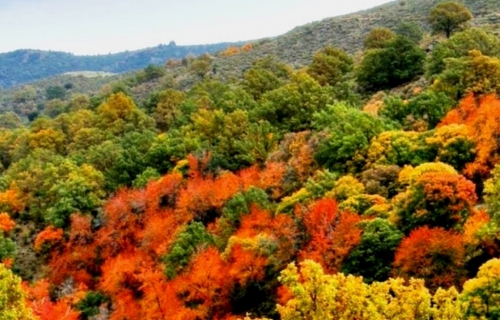
Mediterranean forests are the most biodiverse in Europe, with its ecosystems containing different characteristics and needs from those of Central Europe. Despite this, the EU Forest Strategy underestimates the value of ecosystem services to mitigate climate change and species protection.
LIFE Adaptamed is a project that aims to mitigate the negative effect of climate change on key ecosystem services that three iconic and representative Mediterranean natural protected areas. Through the actions of management and adaptation of ecosystems to climate change, the project so aims to contribute to enriching the environmental strategies of the European Union. The analysis of current European frameworks shows the need to broaden current approaches to address the challenges and particularities of natural areas in the Mediterranean. The underestimated biodiversity of Mediterranean forests According to the current EU Forest Strategy, forests are mainly valued according to their capacity to be used for wood and biomass production. However, this paradigm must be reconsidered in Mediterranean forests, whose potential for these uses are limited. Actually, in a European context, these forests have outstanding levels of biodiversity. In other words, the ecosystem services provided by biodiversity must be adequately valued in a forestry strategy. Applying the concept of Ecosystem Services to revalue European forest areas Both the EU Biodiversity Strategy 2030 and the EU Forest Strategy give special prominence to the concept of ecosystem services. The growing popularity of this concept demonstrates a shift in the way conservation measures are justified. Beyond the traditional vision of merely protecting species, this novel approach emphasizes ecological processes and the capacity of ecosystems to provide services to societies. In this sense, LIFE Adaptamed is working to adapt forest areas and manage key ecosystems for the EU Habitats Directive, such as the Ziziphus Lotus (Cabo de Gata), the junipers communis (Sierra Nevada) and the Quercus (Doñana). The goal of these actions is to increase ecosystem resilience in the face of climate change. This also helps reduce the risk of pests, fires, erosion and soil loss in order to preserve their capacity to provide ecosystem services. Protecting Mediterranean soil and improving its connectivity Many of the actions carried out within the Life Adaptamed project framework focus on soil importance as support for different essential structures of the ecosystem. These approaches have an impact and provide concepts and criteria for the EU Soil Strategy. Emphasizing its multifunctionality, i.e. the wide variety of ecosystem services provided by protected areas is of upmost importance to promote for the integration of the areas in the green infrastructure network across Europe. Ultimately, this plays a key role in increasing the capacity of adaptation to climate change for species and ecosystems. Mediterranean ecosystems have different characteristics and needs from those of Central Europe The lessons learned from Life adopted have a huge potential impact that can be applied in European strategies for adapting to climate change, especially in the case of key ecosystems in the Mediterranean region. Approaches developed to improve the adaptive capacity of replanted pine-tree forests, which represent a considerable fraction of Mediterranean coniferous forests, are a good example. Extensive evidence suggests that such adaptation strategies need to consider a wide range of factors and including the structure and composition of the forest, geographical location, past uses and others. Overall, Mediterranean ecosystems not sufficiently represented in the EU adaptation policies, as most strategies are often based on the experience throughout Central Europe. It is therefore necessary to adapt these policy guidelines towards the special and complex characteristics of southern European environments, Mediterranean ecosystems have more complex ecological frameworks, but they are also more vulnerable to climate change. In order to tackle the challenges of climate change, the European Union framework policies need to take into consideration the greater complexity of Mediterranean ecological frameworks as well as a greater vulnerability to climate change due to their extreme climatic situation.
|
|
| Subscribe to our bulletin | To unsubscribe from our bulletin Receive the lastest IUCN World Conservation Congress updates, subscribe here. Copyright® 1995-2020 International Union for Conservation of Nature and Natural Resources. All rights reserved. |