 | en - es - fr January 2020   |
|
|
| ||
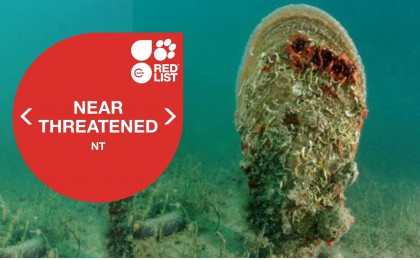
Due to the drastic population size reduction caused by the still ongoing mass mortality event and the fact that the causing pathogen is still present in the environment, the IUCN Red List of Threatened Species has included the Mediterranan Fan Mussel (Pinna nobilis) as as Critically Endangered species. Our recommended actions to address the Pinna nobilis alarm IUCN's recommendations aim to achieve better understanding of Pinna nobilis' situation and to prepare an action programme in both affected and still unaffected areas, including: * Mapping the situation along all coasts, monitoring every 2-3 months to know the status of the populations and if any recruitment is happening even after the mortality event has occurred. * The populations in lagoons and enclosed bays have been less affected by these mortality events. These areas need to be closely monitored. It is important to develop actions to promote the survival of natural recruitment in these areas. * Identifying high-density Pinna nobilis hotspots. Targeted removal of pen shells from highly dense grounds to analyze breeding or replacement in areas where pen shells can’t be found (particularly in inner bays or small lagoons) are also recommended. Caution should be taken to translocate pen shells from the sea to other areas with Pinna to avoid transmission of the disease. * The eventual recovery of impacted populations will depend mainly on the existence of unimpacted populations, resistant individuals and recruitment. Therefore, it is extremely important to enhance larval recruitment and verify if larvae coming from unaffected sites or resistant individuals are reaching the impacted areas, thus potentially contributing to eventual recoveries. In this sense, IUCN has published specific guidelines to construct and install Pinna nobilis larval collectors: |
|
| Subscribe to our bulletin | To unsubscribe from our bulletin Copyright® 1995-2017 International Union for Conservation of Nature and Natural Resources. All rights reserved. |