 | en - es - fr May 2018   |
|
|
| ||
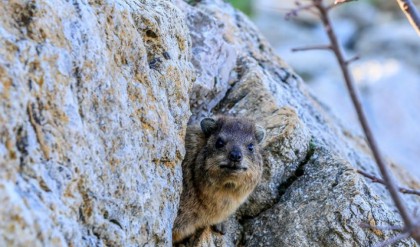
The cedar forests of Lebanon, one of the largest mountain protected areas in the Middle East and the oldest documented forests in history, has featured prominently since the earliest written records dating from the third millennium BC. The expansion of the Roman Empire into Syria and Lebanon had a detrimental effect on the cedars until the Emperor Hadrian installed markers around the boundary of the remaining forests and declared them as ‘Imperial Domain'. Centuries later, the Ottoman Turks deforested all of the cedar growing areas within easy transport distance of their Hijaz railway to provide fuel for their wood-burning engines. Only the highest and most remote groves escaped damage. The cedar is featured on the national flag, the national airline, Government logos, the Lebanese currency and innumerable commercial logos. It is the feature of books, poetry, post cards, posters and art. The cedars of Lebanon are an important part of the cultural heritage of the people of Lebanon. Lebanon only has 12 cedar forests (or groves) that remain. The Shouf Biosphere Reserve (SBR) includes four of these important cedar forests. These forests combined are home to about 25 % of the remaining Cedrus libani in Lebanon, and have the highest level of natural regeneration of this tree. This makes the SBR a critically important site for the long-term conservation and natural propagation of the cedar tree. Currently, the SBR is under the authority of the Lebanese Ministry of Environment (MOE), which manages it through the Appointed Protected Area Committee (APAC) that includes among its members the Al-Shouf Cedar Society (ACS), the mayors of the larger villages, and independent environment experts. APAC communicates with the Reserve's Management Team, which deals with the Reserve's day-today management and planning. The SBR includes the Shouf Cedar Nature Reserve, The Ammiq Wetland, and 22 villages hosting 70,000 people living around the core and buffer zone of the reserve. The SBR consists of a core zone, a buffer zone, and a transition zone to accommodate their multiple functions. Photo: Al-Shouf Cedar Nature Reserve
|
|
| Subscribe to our bulletin | To unsubscribe from our bulletin Copyright® 1995-2017 International Union for Conservation of Nature and Natural Resources. All rights reserved. |