April 2013
| April 2013 |
Indicator experiences in PEGASO CASEs | |
|---|---|
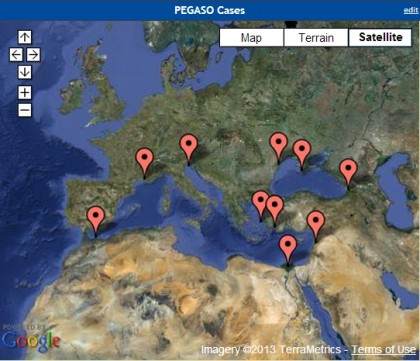 Several PEGASO CASES (pilot cases) are testing and validating the assessment tools developed during the project at different spatial scales. At the moment, the three CASEs in the Black Sea have started to work on methodological sheets and indicators. The Guria Coastal region (Georgia) is adapting the ICZM progress indicator at national level while the Sevastopol CASE has an interesting experience with indicators mainly on water quality and pollution parameters. The Danube Delta CASE is applying biodiversity indicators (species, habitats, fragmentation, etc) and also is working closely to test the application of the LEAC methodology (Land Use and Ecosystem Accounting) at the protected area. In Eastern Mediterranean, the Greece CASE (Aegean islands) has worked on the use of some indicators such as maritime traffic, urban networks and fisheries. Dalyan- Köycegiz Special Protected Area CASE in Turkey has developed a subset of local indicators to report on the state of the environment as well as the assessment of the governance and management structure existing. The Nile Delta CASE of Egypt focused its work more on the development of coastal land use assessment and planning and recently has submitted the conclusions from these studies to the Ministry of Environment. In Western Mediterranean, the Bouches du Rhône CASE (France) has identified the most suitable indicators at the site and is going through an interesting process to prioritise them with a participatory process to share a common vision for their coastal environment. Challenges have arisen in other sites such as Al Hoceima CASE (Morocco) where there is limited information available for planning and work has to start on building local capacity for future planning. The Adriatic CASE, working on sharing experiences from the use of models and data within de Decision Support System, is in the other hand a practical experience on communicating and developing cooperation using other tools. The 10 Collaborative Application SitES (CASES) are thus allowing a good feedback on the assessment tools developed during the project on different spatial scales thus contributing to the Regional assessment in the Mediterranean and Black Sea. More info: f.santoro@unesco.org |
|